
Where do I begin from, or better still where do I start from? Let me start from my beginning [my perspectives]
My coverage of the 2010 FIFA World Cup as the leader of the entire broadcast team under the umbrella of the Broadcasting Organizations of Nigeria, BON, remains one of the crowning moments of my career as a sports commentator in FRCN, more so when the world cup was coming to Africa as host for the very first time in its 80-year history.
KE NAKO! KE NAKO!! WAKA WAKA Africa [It’s time for Africa]. Welcome, to the 19th FIFA World Cup…. the African world cup…the first ever on African soil! Celebrating Africa’s humanity…. celebrate the game we love!
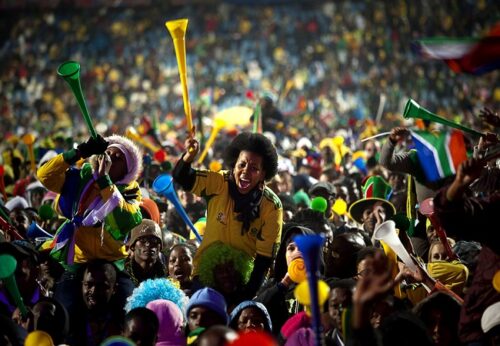
It’s time for Africa to stand tall, time for her people to open their arms to the rest of the world and time indeed for the beautiful game of football to echo from Johannesburg to Durban, from Soweto to Cape Town, this is more than football, it’s a celebration of culture, of resilience, of diversity…. as the vuvuzelas sing their signature anthem, and Soccer City glows and yawns for action, the spirit of unity emerges as Africa tells its story in one shared platform.
I was in Rainbow country, the home of Madiba one whole week before the commencement of the tournament. “Welcome to Mzansi became a philosophy of pride and warmth, every South African wanted to make the best of the World Cup anywhere and everywhere – in the township, in the city, in the Café or inside a taxi, the interest and curiosity were elaborate.
I had time to visit the national and world monuments. I was in Soweto, in Robben Island walking through the narrow corridors where Nelson Mandela spent 18 out of his 27 years in jail. It was a sobering reminder that the Rainbow nation was still healing from a difficult past. I also visited the Apartheid Museum, but it was the Table Mountain Top in Cape Town that provided the alluring spectacle to me.
These experiences and exposures enriched my commentary. There was dignity, generosity and pride as many locals volunteered information on traditions, music and their long walk from the walls of apartheid. Their friendliness made my assignment less cumbersome and more like a shared concept. As I explored their physical geography, I was not unmindful of their rich cuisine and exotic traditional delicacies. I ate BRAAI, munched BITTONG—a dried meat snack almost in the mould of Nigeria’s KILISHI. I embraced BOBOTIE, yes, that spiced meat dish, topped with an egg-based custard. I did not miss “my cherished” BUNNY CHOW while I was in Durban. It’s amazing that I have not seen the world adopt this delicacy in other world cup venues since 2010.
As we got ushered into the Soccer City stadium in Johannesburg, venue of the opening ceremony, the ear deafening chorus of Vuvuzelas (you can imagine over 83,000 spectators ceaselessly sing at the same time with their vuvus) it showed clearly that this would be no ordinary tournament.
History was unfolding in front of me, the FIFA World Cup was now on Africa soil, it was “the turn” of Africa to host the Mundial. One face was being awaited on the VIP Box, the face of freedom, reconciliation and the nation’s modern identity, NELSON ROLIHLAHLA MANDELA, but fate had other plans. Just hours before the opening match, tragedy struck the Mandela family as 13-year-old great granddaughter of Madiba, lost her life in a car accident while returning home from the pre-tournament concert.
The Mandela family decided that Madiba will not attend the opening ceremony as a mark of respect to the dead. However, on the night of the closing ceremony, just before Spain and The Netherlands took to the pitch for the final world cup match, Nelson Mandela made his entrance to the stadium in a small electric Cart with Soccer City erupting in ecstasy to show love through a cacophony of Vuvuzela sounds, the kind only an appreciative citizenry can give to a big father. I captured this moment with goose pimples all over my body:
Good evening, Nigerians and the entire world, this is Emeka Odikpo
Reaching you live from the Soccer City Stadium in Johannesburg
The venue for the opening ceremony of the FIFA world cup
Since June 11th till today, South Africans and soccer loving people
have danced and celebrated with their vuvuzelas as the whole world
gathered for the 19th edition of the world cup in South Africa
The former president, Nelson Mandela is making his way into the Soccer City
Seated in the small electric cart, dressed in a winter coat and waving gently to
To the crowd.
As I look at the faces of people here, I see some people crying, some chanting
Mandela’s name and some others hailing and dancing in a maze of sounds
In all my years covering global football events, I have witnessed wonderful goals
Dramatic moments, amazing comebacks like the Dammam Miracle in Saudi
But this is the triumph of human spirit. This is South Africa paying homage
To the one that is due, the man who carried them from darkness to dignity.
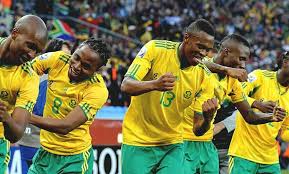
Despite some unforgettable moments outside the stadiums there were equally some dramatic and intriguing moments during the games. South Africa and Mexico opening match provided its drama and thrills. It was the first world cup match on African soil. Siphiwe Tshabalala scored a memorable goal in the tournament and the Vuvuzela created a soundtrack that the world can never forget in a hurry.
Then there was the Ghana/ Uruguay quarter final match, which was to me, the most intriguing and the emotional peak of the 2010 world cup. Ghana pushed to be the first African nation to get to the semifinal of the world cup. The match ended 2-2 in regulation but at 120 minutes in extra time, the drama peaked. Ghana’s Dominic Adiyiah’s header was going into goal to end all doubts but was deliberately batted away by Uruguay’s Luis Suarez with his hand. He was then given a red card and a penalty awarded against his side. Asamoah Gyan missed the kick, and Ghana was knocked out in the ensuing penalty shootout and the hope of Africa was shattered.