
In defeat, clarity often emerges more sharply than in victory. Nigeria’s Super Eagles fell short against Morocco last night, but the result should not obscure the deeper lessons from the performance – or the progress quietly being made.
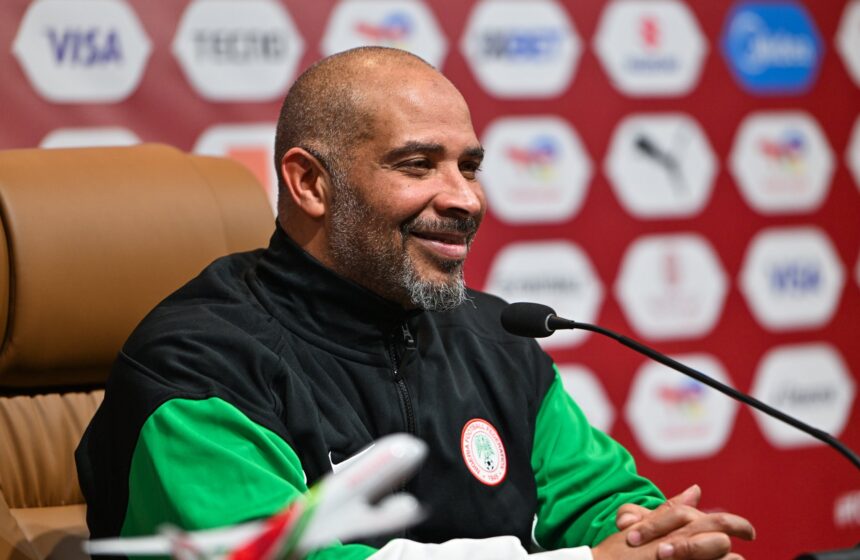
First, credit where it is due. The Super Eagles showed what is possible when the Naija spirit is fully engaged: commitment, structure, and collective belief. This was not a loss shaped by officiating, even though there were some puzzling calls. It was a tactical outcome. Morocco effectively neutralized our front three and denied us freedom in midfield. The evidence is simple: how many clear-cut chances did Nigeria truly create? Very few, if any.
To Morocco’s credit, they executed their plan well. To Nigeria’s credit, Eric Chelle responded in kind. Our back four—marshalled superbly by Calvin Bassey—stood firm throughout. Bassey, in particular, continues to impress. If his development stays on this trajectory, he is destined for the highest level. Watching him now evokes memories of Gabriel Magalhães at Arsenal three or four years ago: raw authority gradually turning into elite assurance.
Beyond tactics, one of the most encouraging aspects of this camp was how the team handled adversity off the pitch. The Victor Osimhen outburst could easily have destabilized the group. Instead, Eric Chelle and the NFF dealt with it internally. That is what serious teams do—protect unity, respect individuals, and resolve issues away from the spotlight, always with the collective good in mind.
Psychology is often where matches of this nature are decided, and I will not dwell too deeply on what may have been missing in the decisive moments. Football can turn on a single action. Had Samuel Chukwueze converted his chance, the narrative today might be entirely different. History is full of examples of elite players missing at critical moments—Zico and Roberto Baggio are enduring reminders. Chukwueze will likely carry this moment with him for some time, and that is human.
I say this with empathy because I have lived it. Decades ago, playing for my high school team, we were down 0–2 when I came on as a substitute. I scored twice to level the match. After extra time, it went to penalties. I missed the only kick of the shootout. It happened on my birthday. I was inconsolable. Even now, I can still picture the ball striking the post, my hands covering my face, the tears flowing. Football has a way of etching such moments permanently into memory.
That said, body language matters. Chukwueze’s casual demeanour—chewing gum, walking nonchalantly—did him no favours in the court of public opinion. Hopefully, this becomes a learning moment, not a defining one.
Looking ahead, my view is clear: Nigeria should keep Eric Chelle. This is notable because I was not initially in favour of his appointment. Yet he has laid a foundation that can be built upon and, crucially, has earned the trust of the players. Stability matters. Continuity matters. He deserves to be paid his outstanding salary and allowances (if owed) – professional treatment begets professional results.
There is also a lingering concern. Coaches who show competence, structure, and man-management in Africa rarely stay unnoticed for long. It would not be surprising if another country comes calling.
For the Super Eagles, the task now is simple but not easy: resist the urge to panic, refine what is already working, and build on a foundation that—despite the disappointment—offers genuine reason for optimism.
Bimboh Adekoya is a widely travelled football person.