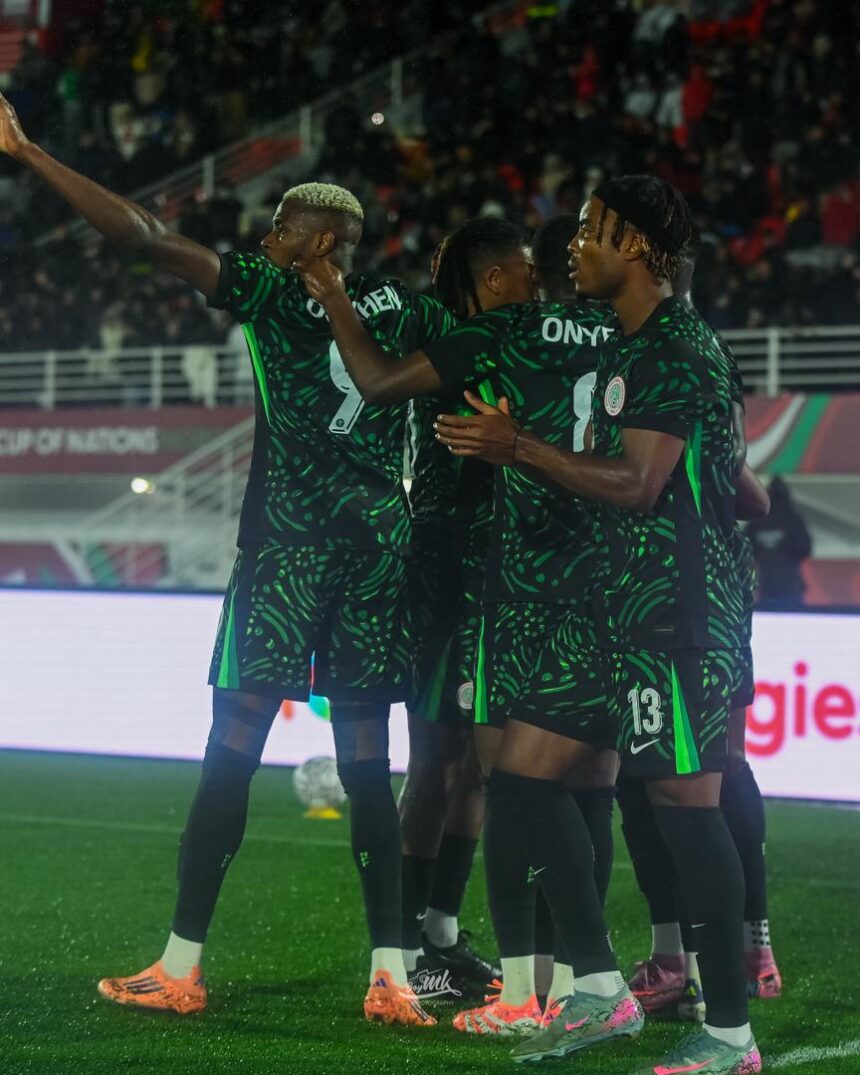

Nigeria’s Super Eagles arrived in Morocco for the AFCON with a familiar label attached to them – favourites weighed down by history, expectation and the constant demand to dominate African football.
Just weeks after failing in their quest to reach the World Cup in North America, Eric Chelle and his boys have been excellent against the opposition they have faced so far, and credit must be given to them for that at least.
Much like before the last AFCON in Côte d’Ivoire, the Super Eagles were not at their absolute best heading into this tournament. The squad had also lost key players such as former MVP William Troost-Ekong to retirement and youngster Benjamin Fredrick to injury.
Yet, the Eagles have shown resilience, delivered on the pitch, and booked their spot in the last eight. With a record 18th quarter-final appearance, Nigeria will hope to build on their historic run and continue their march toward continental glory.
Although defensive frailties are still evident, Chelle has been able to get his attacking talents firing in Morocco. Samuel Chukwueze has two goal contributions, Alex Iwobi also grabbed two assists against Tanzania, before delivering a strong performance against Mozambique. By the way, a lot has been said about the front trio of Ademola Lookman, Akor Adams and Victor Osimhen.
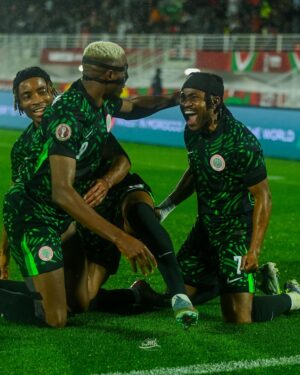
Lookman has already earned two man-of-the-match awards, signalling a strong continuation from his previous AFCON campaign, while Osimhen has scored three goals this tournament after netting just once in the last edition.
However, the on-field tension between the two stars from the win over Mozambique has threatened to cast a shadow over the team’s unity. At the time of writing this piece, there has been no media clip from the past two Super Eagles training sessions. It says a lot.
In a team chasing a continental crown, even minor cracks can be magnified, especially when they involve pivotal players. Chelle and his technical team face the challenge not of eliminating disagreement entirely but of channelling it into competitive energy that benefits the collective.
If internal dynamics were not enough, Nigeria have also had to navigate the “bonus row.” Disputed or delayed payments are an all-too-familiar distraction in Nigerian football, and this tournament has been no exception. For players putting their bodies on the line on Africa’s biggest stage, uncertainty over promised rewards can gnaw at focus – a subtle but serious disruption during high-stakes knockout matches.
Now, a familiar foe stands in the way: Algeria, who, like Nigeria, have won all their games in the tournament. History does not favour the Super Eagles here, having lost two of their past three knockout encounters with the Desert Foxes.
If the team can keep their unity intact and rise above the real distractions, they have every tool needed to go all the way. But if the off-field issues are allowed to grow, even the strongest squad can unravel. For now, Nigeria march on – battered, tested, but still dreaming of African glory.