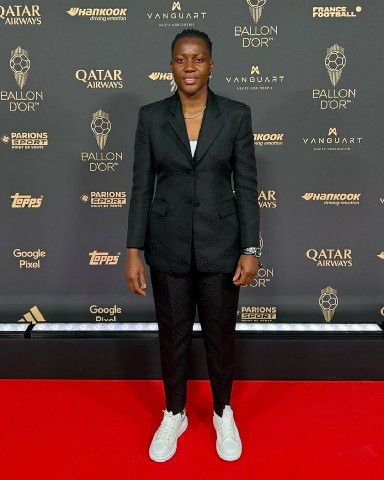

Nigerian goalkeeper Chiamaka Nnadozie, was ranked 4th in the inaugural 2025 Women’s Yachine Trophy at the Ballon d’Or in France.
The award went to England’s Hannah Hampton, followed by Germany’s Ann-Katrin Berger and Spain’s Cata Coll, with Nnadozie ahead of the Netherlands’ Daphne van Domselaar.
Speaking to www.aclsports.com, journalists Samuel Ahmadu and Emmanuel Etim reflected on Nnadozie’s standing and the broader challenges African players and coaches face in gaining fair recognition on the global stage.
“I’d call it a sign of progress,” Ahmadu said. “Being ranked 4th in the world is huge recognition for an African goalkeeper, considering the historic Euro-centric bias in such awards. She may have deserved a podium place, but the fact that she’s already in the elite conversation shows the respect her performances command globally.”
Etim added: “Being the only African on the final shortlist is in itself recognition. Her ranking gives credence to her ability and consistency. With her move to the WSL, she could be in the top two in a few years.”
Nnadozie’s season included commanding performances for Paris FC, helping the club win a trophy for the first time in 19 years, and leading Nigeria’s unbeaten Women’s Africa Cup of Nations (WAFCON) run.
“Based on her consistency with Paris FC and her role in Nigeria’s unbeaten WAFCON, she had a strong case for the top three,” Ahmadu said. “Still, finishing 4th is recognition and a reminder that African players often have to work twice as hard for global validation. The gap, however, is fast closing.”
“She should feel pleased being shortlisted. A top-four finish is as good as a podium placement,” Etim commented.
Ahmadu welcomed the women’s goalkeeper award: “Absolutely overdue. Goalkeepers, especially in women’s football, have long been underappreciated. I’m glad CAF also introduced this category. It recognizes the position’s unique demands and emerging talents, giving them the global spotlight they deserve.”
The discussion also turned to African coaches, with Nigeria’s Justin Madugu losing the Women’s Johan Cruyff Trophy to England’s Sarina Wiegman.
“It’s disappointing but not surprising,” Ahmadu said. “African coaches rarely get their due. Madugu’s unbeaten team came from two goals down to beat the reigning World Cup-winning coach, yet global awards tend to prioritise European or World Cup-winning managers.”
Etim offered another perspective: “I don’t think it’s a snub. The Falcons were always favourites for WAFCON. Going unbeaten is great, but the Lionesses also had a successful season. This is a UEFA-based award; a non-UEFA coach would likely need a World Cup win to be voted number one.”
On whether African coaches face bias, Ahmadu said: “Yes, Europe-based coaches are clearly favoured. Success in Africa or Asia is often undervalued. Until global football weighs continental success more fairly, African coaches will continue to be overlooked.”
For Etim: “It’s subjective. A tournament like the Euros is prioritised over WAFCON. Extraordinary performances are needed for non-UEFA players or coaches to make the top of the list.”
When asked what more Madugu could have done to be considered the best coach, Ahmadu said: “Short of winning the World Cup, there’s little more. Winning WAFCON unbeaten is massive, but the narrative of ‘best coach’ is almost always Eurocentric. A deep World Cup run could change that.”
Etim concluded: “The tournament plays a huge role. A year with the Euros is prioritised over WAFCON. That’s the reality for awards like the Ballon d’Or.”
While neither Nnadozie nor Madugu won, their nominations mark historic milestones for Nigeria, signaling the growing recognition of African talent in women’s football.